ESP32 & ESP8266 Connectivity · Intermediate · Notifications
ESP8266 Telegram Alert Node
A threshold that messages your phone once when it is crossed, and once when it clears.
Firmware status: Generated from this project's own pin map and compiled with arduino-cli for esp8266:esp8266:nodemcuv2 before publication; bench validation on your hardware is still required.
Board: ESP8266 (NodeMCU v3 / Wemos D1 mini) · ESP8266EX @ 80 MHz · 3.3 V logic · build for esp8266:esp8266:nodemcuv2.
What you will build
An ESP8266 watching a sensor and sending an edge-triggered message rather than a stream of them.
Components
- ESP8266 board
- Analog sensor
- Telegram bot token and chat id
- USB cable and a 5 V supply
Pin map for this build
| Sketch constant | Pin | What it is |
|---|---|---|
PIN_SENSE | A0 | Sensor — analog output, 3.3 V maximum |
Tools
- USB programming cable
- Multimeter
- Current-limited bench supply (for anything that switches a load)
- Small screwdriver and wire cutters
Build sequence
- Create a bot through BotFather and get the token; send it one message so the chat id exists.
- Set BOT_TOKEN and CHAT_ID, flash, and confirm the online message arrives.
- Cross the threshold and confirm exactly one alert.
- Return below it and confirm exactly one recovery message.
Test and expected result
One message per crossing, one per recovery, and no messages while the value sits on one side.
Acceptance checks
alert on crossing, recovery on clearing, no repeats, token not committed
Safety and limits
The bot token is a password. Do not commit it, and revoke it from Telegram if a board with it is lost.
Hardware scope
HTTPS POST to a public API, edge detection, no continuous polling of the sensor.
Connection diagram
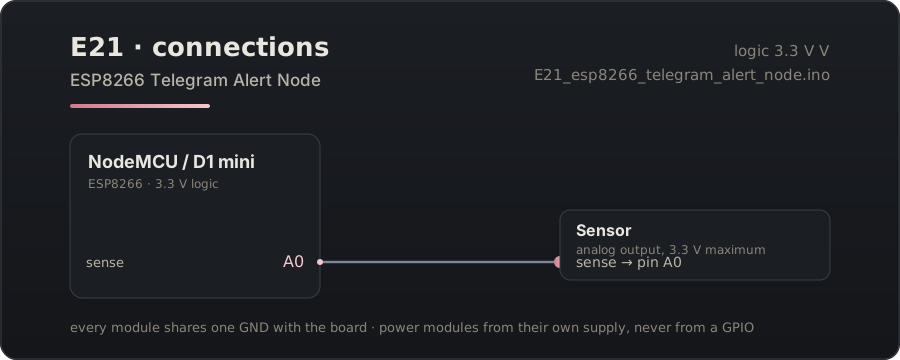
Download the connection diagram (SVG)
Download the Arduino sketch (E21_esp8266_telegram_alert_node.ino)
Guide source: the sketch on this page was generated from the pin map above and compiled for esp8266:esp8266:nodemcuv2 before publication.
Related projects
- ESP32 Captive Portal Wi-Fi Manager — Boot the ESP32 with no credentials and configure its network from a phone, with the portal saved to flash.
- ESP8266 Config Portal — The same idea on the cheapest board that can do it: an ESP8266 that configures itself from a browser.
- ESP8266 Sensor Portal Logger — A battery-minded sensor node you configure in the field, with the reading shown on its own setup page.